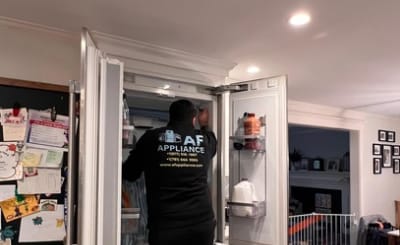
The compressor is the heart of your refrigerator. Without it, the cooling cycle cannot operate. When the compressor begins to fail, the entire appliance is affected—leading to temperature fluctuations, spoiled food, strange noises, or increased energy consumption. Below is a full explanation of the most common compressor problems, their causes, and what they mean for your refrigerator.
The Compressor Doesn’t Start at All
This is one of the most common signs of compressor failure.
Possible causes:
-
Faulty start relay or overload protector
The start relay helps the compressor turn on. If it fails, the motor cannot receive the current it needs to start. -
Internal short or burnout inside the compressor
Damaged motor windings prevent the compressor from receiving proper power. -
Defective thermostat or control board
The refrigerator may not send the signal required to activate the compressor.
Result:
The refrigerator will not cool, and internal temperatures will rise quickly.
Compressor Runs, but Cooling Is Weak
Sometimes the compressor works, but the refrigerator still fails to cool properly.
Possible causes:
-
Low refrigerant level (leaks in the sealed system)
A small leak is enough to reduce cooling efficiency significantly. -
Dirty condenser coils
Dust and debris reduce heat transfer, causing the compressor to run but cool poorly. -
Evaporator fan malfunction
Without proper airflow, cold air cannot circulate throughout the fridge.
Result:
Food cools slowly or unevenly, and the temperature may remain too high.
Compressor Runs Too Frequently or for Long Periods
A constantly running compressor wastes energy and shortens the unit's lifespan.
Possible causes:
-
Damaged or worn door gaskets
Air leaks allow warm air inside, forcing the compressor to run continuously. -
Faulty temperature sensors
Incorrect readings cause the system to overwork. -
Ice buildup on the evaporator coils
Blocked airflow forces the compressor to run longer than normal.
Compressor Is Loud or Makes Unusual Noises
A healthy compressor produces a low, steady humming sound.
Possible causes:
-
Old or mechanically worn compressor
Internal wear increases noise and vibration. -
Loose mounting bolts
This causes the compressor to shake excessively. -
Nearby components making noise
Sometimes the fan, relay, or tubing—not the compressor—is responsible.
Compressor Overheating
If the compressor becomes extremely hot to the touch, it’s a sign of severe stress.
Possible causes:
-
Condenser fan failure
Without proper airflow, heat cannot escape. -
Low refrigerant
The compressor works harder to maintain cooling, generating excess heat. -
Thermostat or sensor malfunction
If the compressor runs non-stop, it overheats and may burn out.
How Technicians Diagnose Compressor Problems
Diagnosing compressor issues requires professional tools and knowledge, especially since the sealed system is involved.
Technicians typically perform:
-
Electrical continuity testing
-
Relay and capacitor checks
-
Refrigerant pressure measurement
-
Leak detection
-
Mechanical and electrical performance testing
If internal mechanical damage is detected, compressor replacement is often required.
What AF Appliance Can Do for You
At AF Appliance, we provide complete repair and diagnostic services for all refrigerator compressor issues:
-
Full compressor testing and evaluation
-
Start relay, capacitor, and control board inspection
-
Refrigerant leak detection and repair
-
Sealed system service
-
Professional compressor replacement
-
Performance testing after all repairs
We ensure your refrigerator cools efficiently, safely, and reliably.